
Quick answer: what plug types and voltage will you find in China?
The three common plug types (A, C, I) – how to recognise them
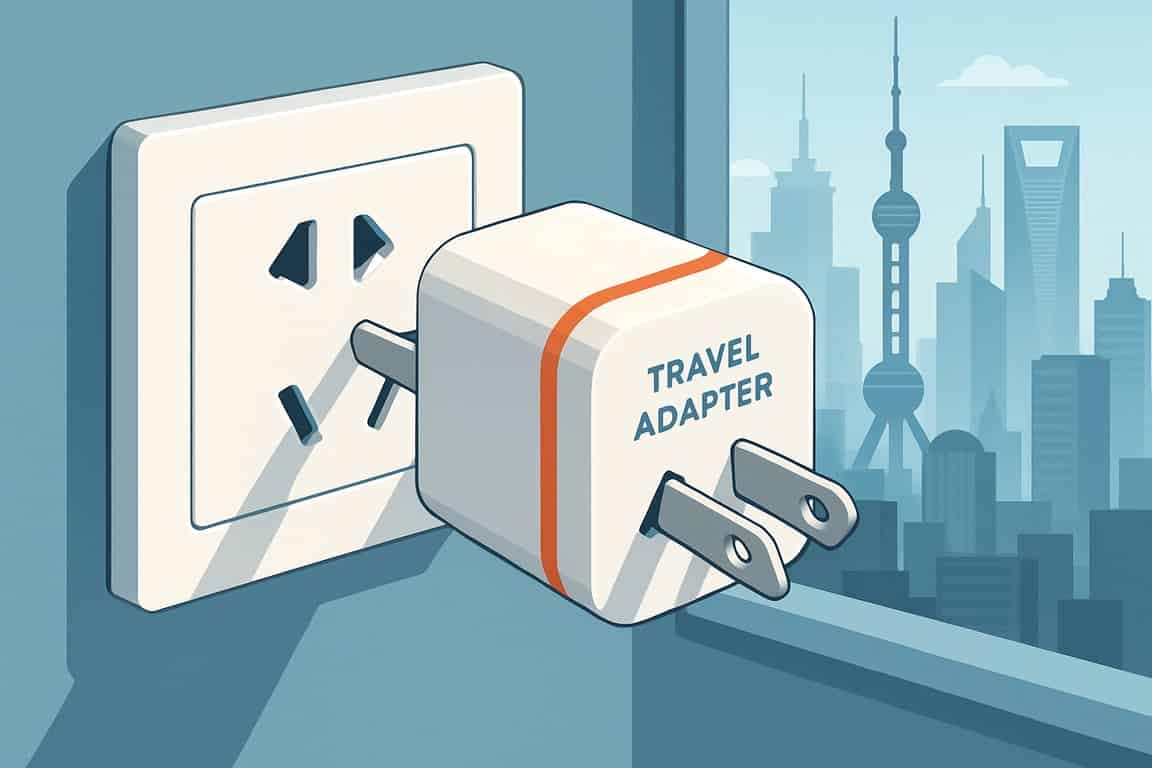
When travelling to China, understanding the plug types used can save you a lot of hassle. The most frequent plug types you will encounter are Type A, Type C, and Type I.
Type A plugs have two flat parallel pins and are often found in older appliances and some imported electronics. Type C plugs are the familiar Europlug with two round pins and are commonly used across many parts of Asia and Europe. Lastly, Type I plugs have two flat angled pins in a V-shape plus a grounding pin below, and they are the predominant standard plug in Mainland China.
Standard voltage and frequency (220V, 50Hz) and why it matters
China’s standard electricity voltage is 220 volts with a frequency of 50 hertz. This voltage is higher than in some countries (for example, the US uses 120V), so travelers must ensure their devices can handle this voltage to avoid damage. Appliances designed only for lower voltages may need a voltage converter, while devices compatible with 220V will just require the right plug adapter.
Mainland China vs Hong Kong, Macau and Taiwan – key differences travellers must know
What to expect in Mainland China (multi-format sockets and Type I prevalence)
In Mainland China, you’ll find a mix of multi-format sockets that accept more than one plug type, but Type I sockets dominate. Many hotels, offices, and homes have hybrid sockets that fit Types A, C, and I, which is handy for travelers. However, the safest bet is carrying a Type I adapter to ensure compatibility.
How Hong Kong/Macau (Type G) and Taiwan (Type A/B, 110V) differ – travel implications
Hong Kong and Macau differ significantly from Mainland China by predominantly using the British-style Type G plugs with three rectangular pins, running on 220V at 50Hz. Meanwhile, Taiwan typically uses Type A and Type B plugs with two flat parallel pins or an added grounding pin, but crucially, the voltage here is 110V at 60Hz — quite different from the Mainland. This means travelers must prepare accordingly when moving between these regions, often requiring separate adapters and voltage checks.
Will your devices work? How to check compatibility
Reading charger and appliance labels: dual-voltage vs single-voltage
Before packing your devices, check their labels or user manuals to see if they support dual voltage. Dual-voltage chargers or appliances often say something like “Input: 100-240V, 50/60Hz,” indicating they’ll work safely in China’s 220V system. Single-voltage devices will only list one voltage (e.g., 110V), which means extra caution is necessary.
When you need a voltage converter/transformer vs only a plug adapter
If your device is dual voltage, you only need a plug adapter to connect it to China’s sockets. However, if your device supports only a lower voltage, such as 110V, you’ll require a voltage converter or transformer to adjust the power safely, especially for high-wattage devices like hair dryers or electric shavers.
Picking the right adapter and power solution for China
Types of adapters: simple plug adapters, universal adapters and travel power strips
The simplest solution is a plug adapter converting your foreign plug into a Type I plug. Universal adapters are versatile as they accept many plug types but ensure they support China’s voltage and frequency. Travel power strips with surge protection are handy too, letting you charge multiple devices at once while offering some electrical safety.
Choosing converters/transformers: wattage limits, continuous vs short-term use and device examples
For devices that need voltage conversion, select a transformer matching or exceeding your device’s wattage. Continuous-use transformers are suited for appliances like electric kettles, while short-term use converters are good for devices like camera chargers. Always check the specifications carefully to avoid overheating or damage.
What to pack: recommended travel kit and device-specific tips
Essential items to bring (Type I adapter, USB-C PD charger, surge-protected power strip)
When packing for China, your essentials should include a reliable Type I plug adapter, a USB-C PD charger for fast charging compatible devices, and a surge-protected power strip if you want to power multiple gadgets simultaneously. These basics cover most electronic needs and protect your devices.
Device-by-device advice: phones, laptops, hair tools, shavers and cameras
Phones and laptops usually use dual-voltage chargers—just bring your Type I adapter. Hair tools and shavers often need a voltage converter if they’re not dual voltage. For cameras, their chargers are generally dual voltage, so a plug adapter suffices. Always check your device tags and pack accordingly.
Safety, common problems and smart charging habits
Avoiding unsafe/cheap adapters, earthing issues and double-insulated device guidance
Cheap adapters might fit physically but pose safety risks such as poor earthing or overheating. Investing in certified, quality adapters is critical. Many modern devices are double insulated and don’t require grounding, but hair dryers and laptops often do. Be mindful of these facts to prevent shocks or damage.
Safe use of hotel sockets, public charging stations and power banks
Hotel sockets can vary in quality; always inspect before use and avoid overloading power strips. Public charging stations might offer USB ports but watch for data security risks and prefer your own cables. Power banks are a great backup for on-the-go charging but ensure they comply with airline regulations.
Where to buy adapters and what to check before purchase
Best places to buy before departure (brands, specs and retailer tips)
Before leaving, buy adapters from trusted electronics or travel stores. Look for well-known brands that specify compatibility with Chinese plug types and voltage. Avoid generic or unbranded products to ensure safety and durability. Check online reviews and retailer assurances as well.
Buying in China: reliable stores, expected prices and products to avoid
If you forget to bring an adapter, you can buy one in China at electronics markets or convenience stores, often cheaper but variable in quality. Prices are typically low, but beware of counterfeit or substandard products lacking safety certifications. Stick to well-established shops in major cities for reliable purchases.
Country-specific quick guide: what adapter travellers from common regions need
At-a-glance: UK, EU, US, Australia, Japan, Singapore – plug conversion & voltage notes
UK travelers need a Type I adapter from their Type G plugs; EU visitors must convert from Type C or E/F to Type I; US and Japan typically use Type A and B plugs with lower 110V voltage, so a voltage converter is often necessary for Mainland China; Australians must switch from Type I but watch on plug shape differences; Singaporeans mostly use Type G or C and must prepare accordingly.
Practical tips per region (typical appliances to watch and common mistakes)
UK visitors often overlook voltage but their plugs need adapters; EU travelers commonly forget dual voltage checks on hair tools; US and Japanese tourists sometimes risk damage by not using converters; Australians should confirm pin orientation; Singapore travelers should double-check plug compatibility, especially when crossing between regions.
FAQ and troubleshooting for last-minute issues
Common questions: can I use hair tools, European chargers, USB-only sockets?
Hair tools might require voltage converters unless they’re dual voltage; European chargers often fit Type C sockets but check power specs; USB-only sockets are convenient but may limit charging speed or device types.
Troubleshooting loose plugs, fused adapters and what to do if something sparks
Loose plugs can cause sparks or heating—replace or tighten immediately. Fused adapters have protective fuses; if they blow, swap with an appropriate fuse. If sparking occurs, unplug immediately and avoid reuse until inspected.
Appendix: one-page quick reference and printable packing checklist
Two-line quick reference card: plug types + voltage + must-have adapter
Plug Types: A, C, I (mainland); Voltage: 220V, 50Hz; Must-have adapter: Type I
Printable packing checklist and short pre-trip safety reminders
Checklist: Type I adapter, USB-C charger, power strip with surge protection, voltage converter (if needed), device labels checked.
Safety reminders: avoid cheap adapters, check device voltage, inspect power outlets before use.
About The Author